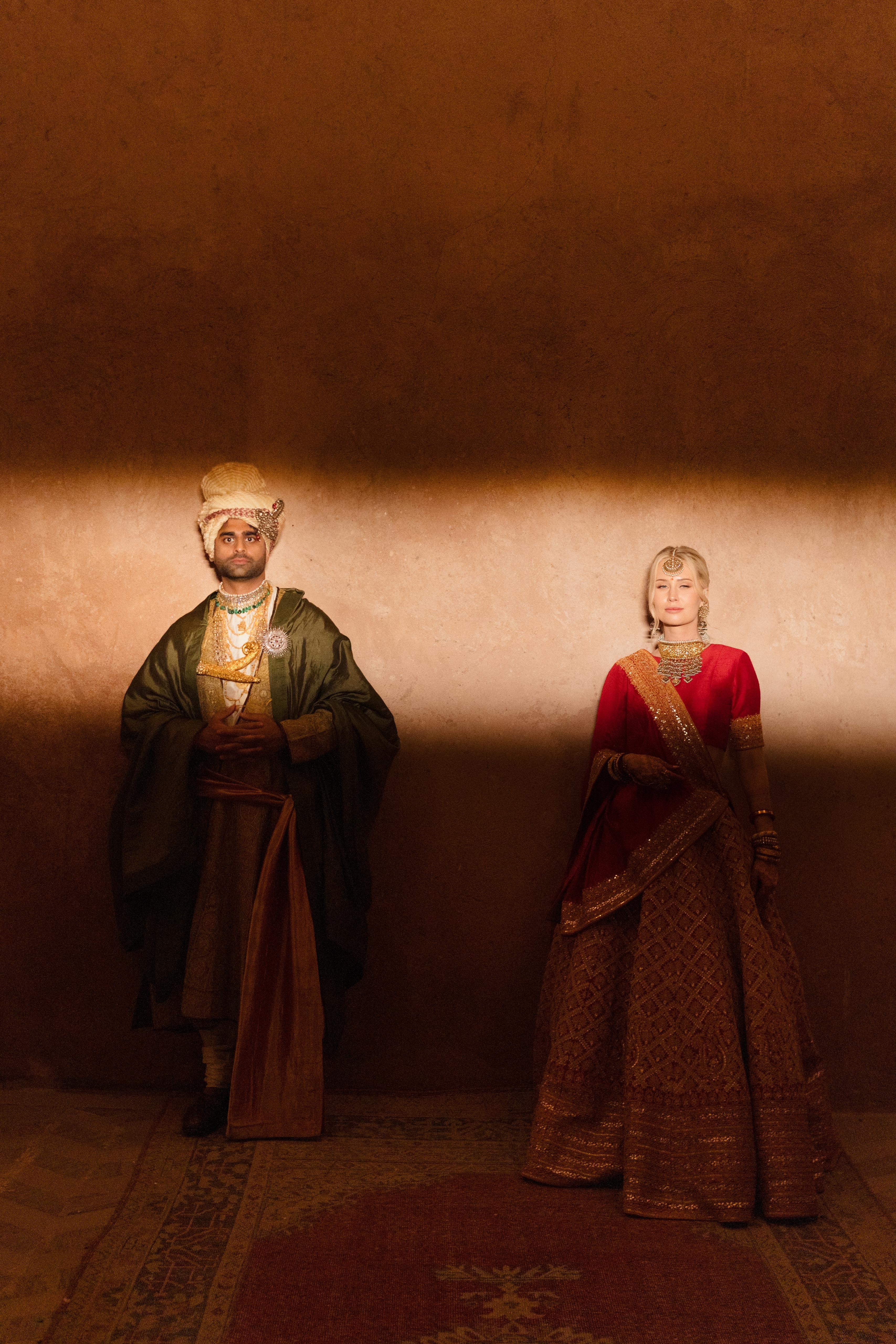
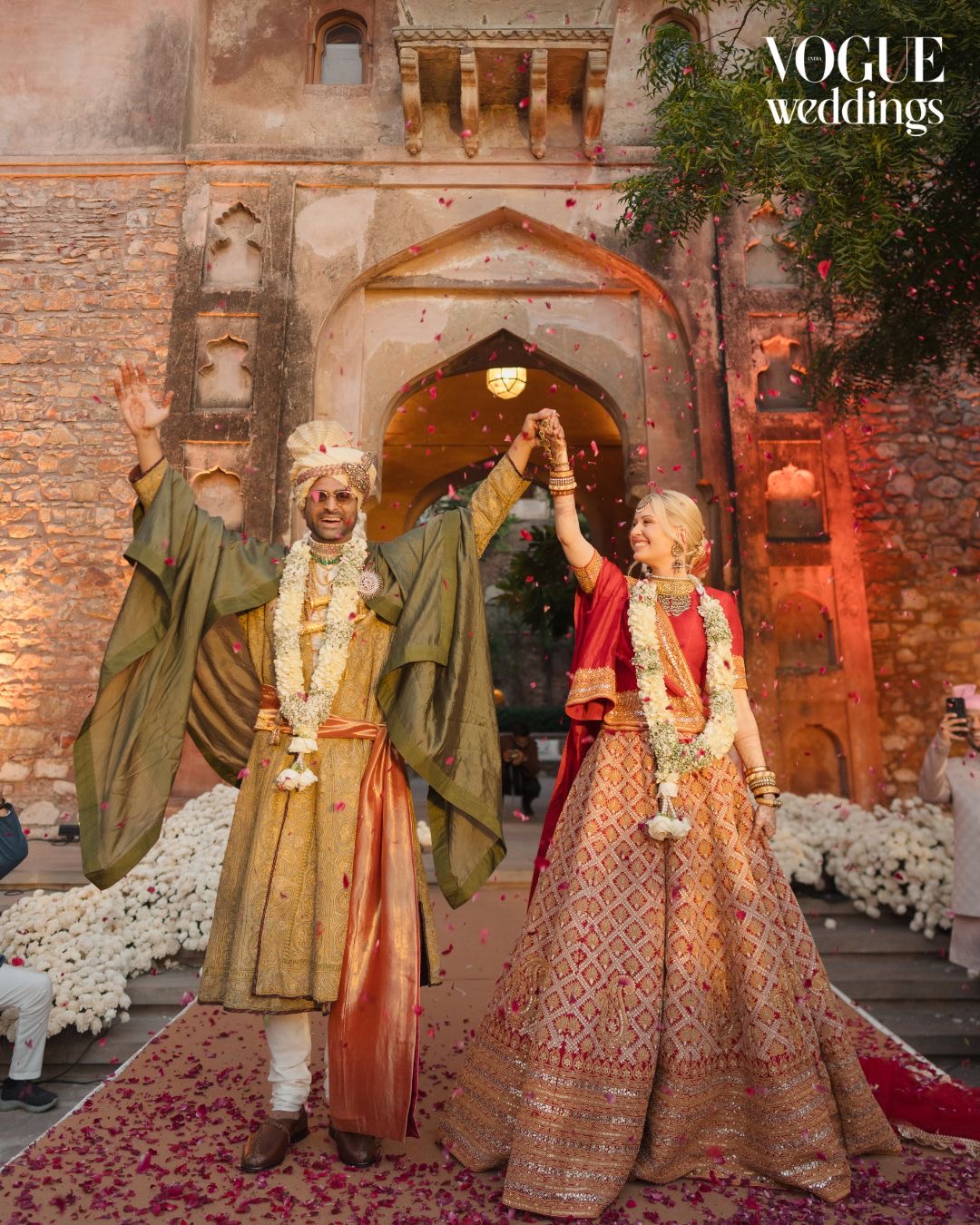
Presenting Siddharth and Rebecka’s wedding wardrobe, a couture narrative shaped through time, texture, and legacy, exploring the instinctive connection between heirloom craft and contemporary identity.
A study in time, texture, and legacy—reimagined not as nostalgia, but as presence.
For Siddharth Morakhia and Rebecka Morakhia, this narrative unfolds as an intimate dialogue between past and present. Not confined to occasion, but shaped as a continuum—where garments carry memory, and memory evolves into form.
At Gph, the process begins with fragments of history—200 to 300-year-old textiles, once preserved as relics, now reawakened through couture. Metal-thread embroideries in real silver and gold are not merely restored, but reinterpreted. Each surface undergoes a meticulous journey of deconstruction, sampling, and reconstruction, allowing heritage to move beyond preservation into transformation.
The language is tactile. Rooted in jangla—a world defined by wilderness, instinct, and quiet movement. Here, texture replaces excess. Embroidery feels unearthed rather than applied. Every detail holds an organic rhythm, as though shaped by time itself.
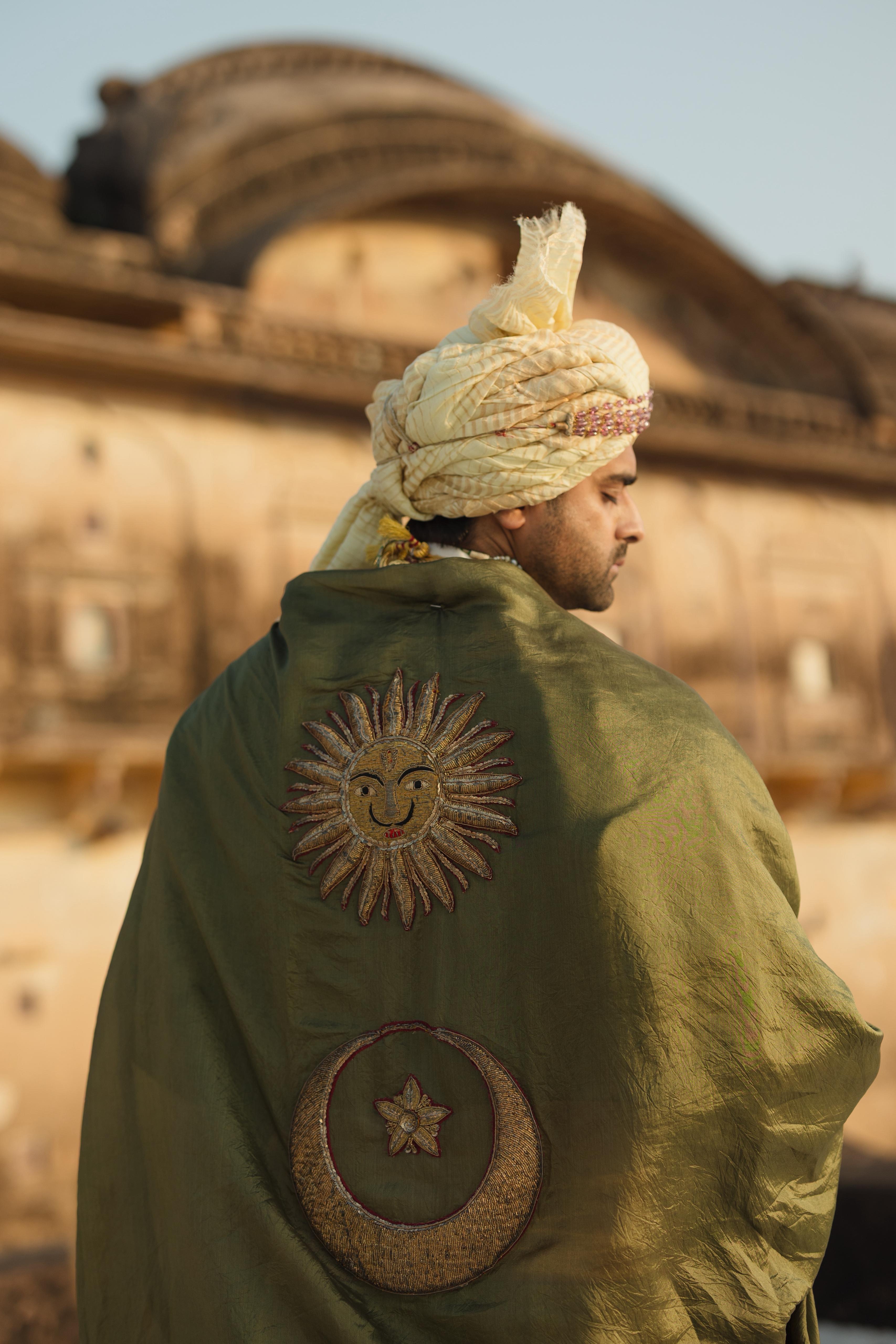
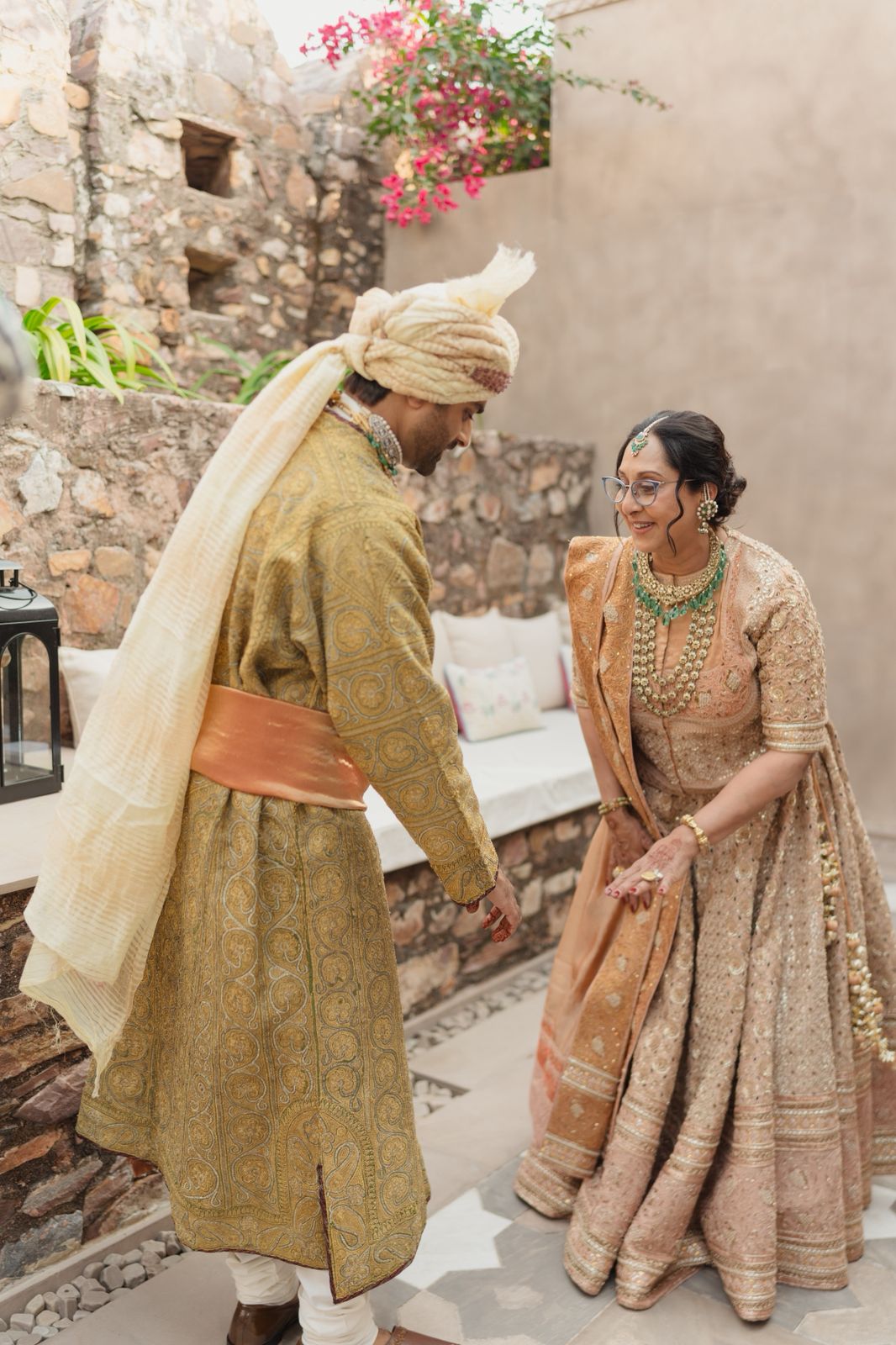
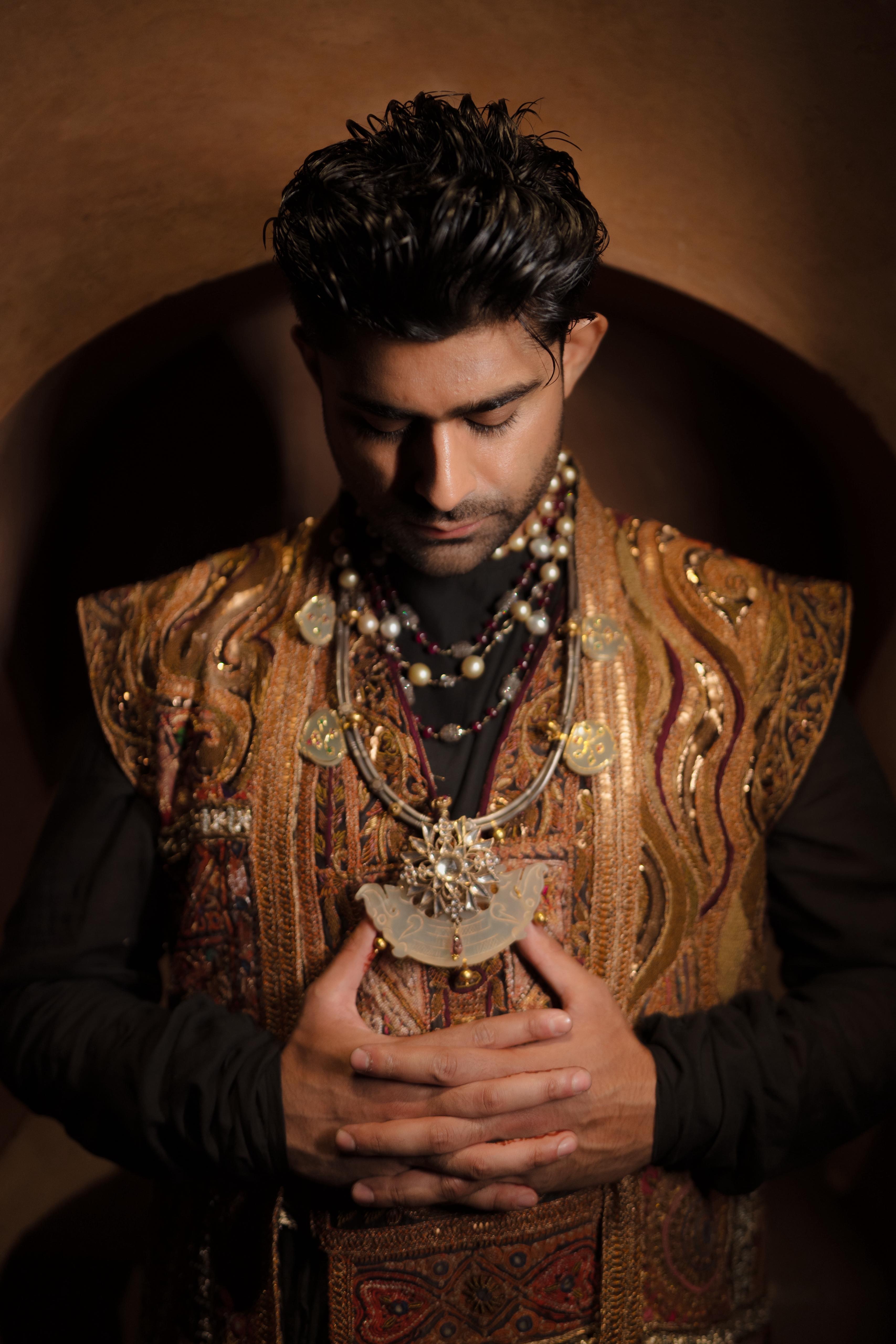
Siddharth’s sangeet look becomes a gesture of inheritance. A 300-year-old white wedding shawl—once belonging to his mother—finds new expression as a sharply tailored Indo-western jacket. Paired with a crisp shirt and flared trousers, the silhouette is restrained, yet deeply personal. Memory, reframed as modernity.
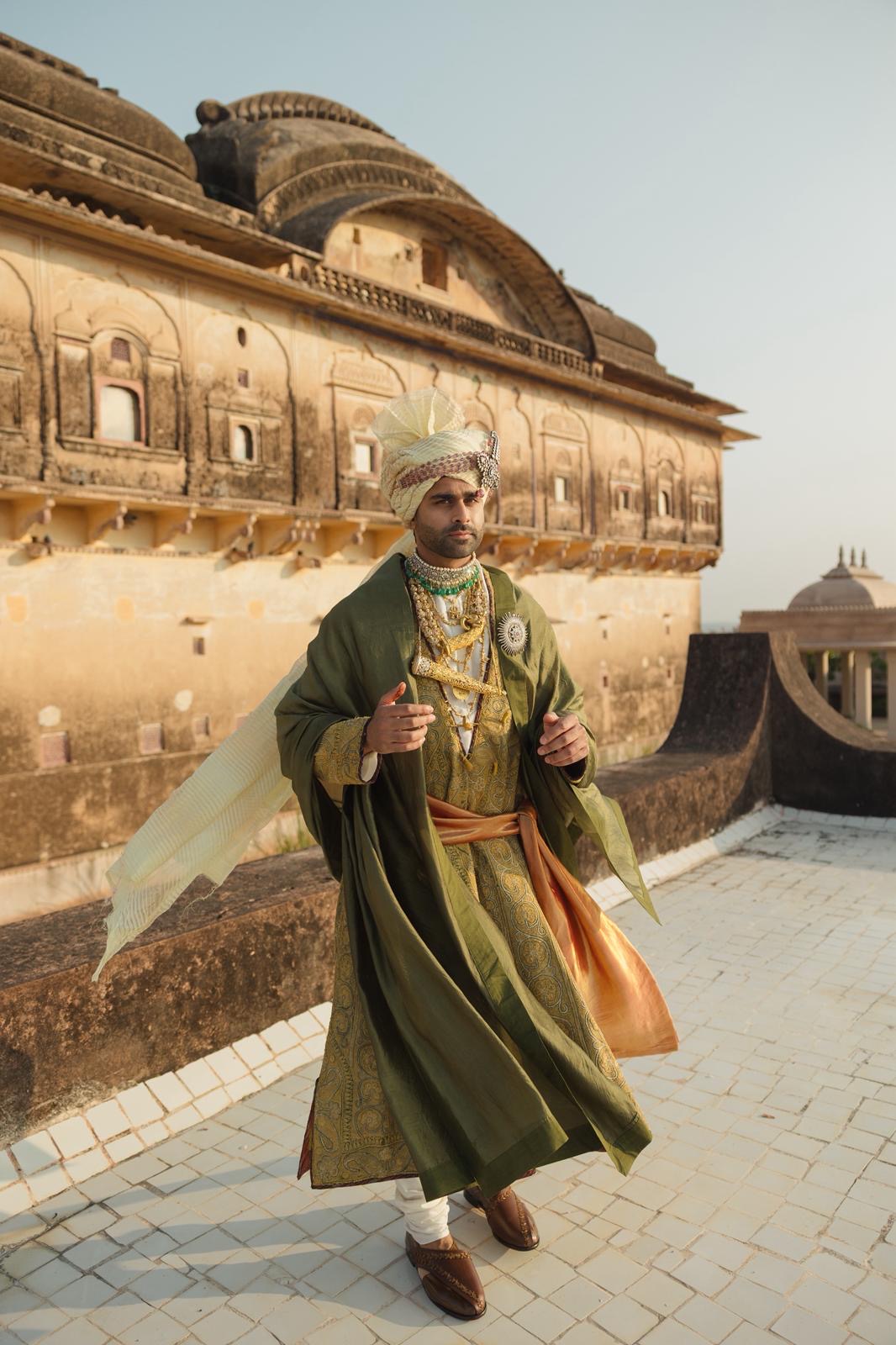
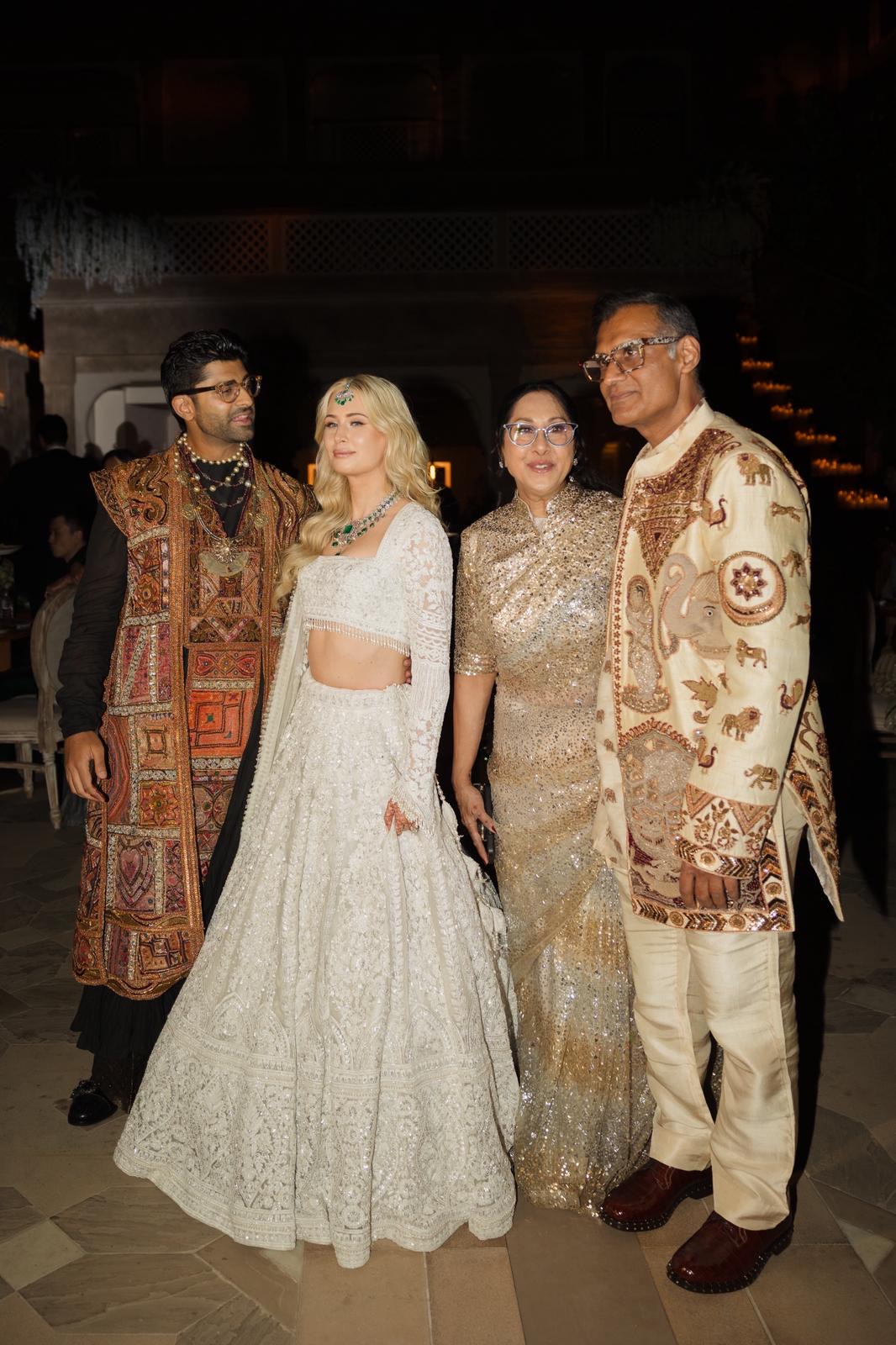
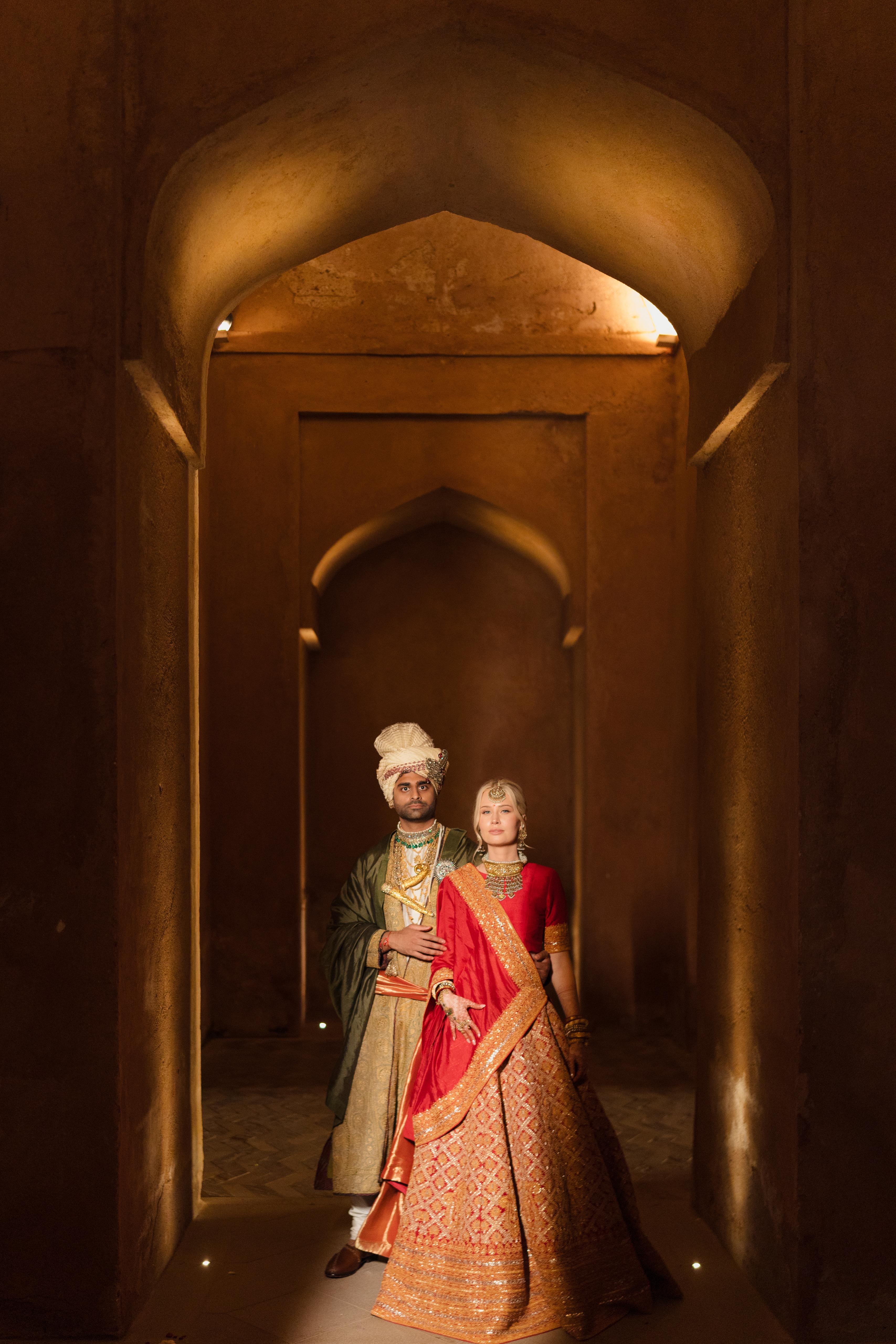
His Jodhpuri long coat extends the narrative—constructed from archival Mochi and Rabari textiles, layered with dok, baadla, and marodi in antique finishes. The surface builds with intention, forming a dimensional structure where craft moves beyond ornament into architecture.
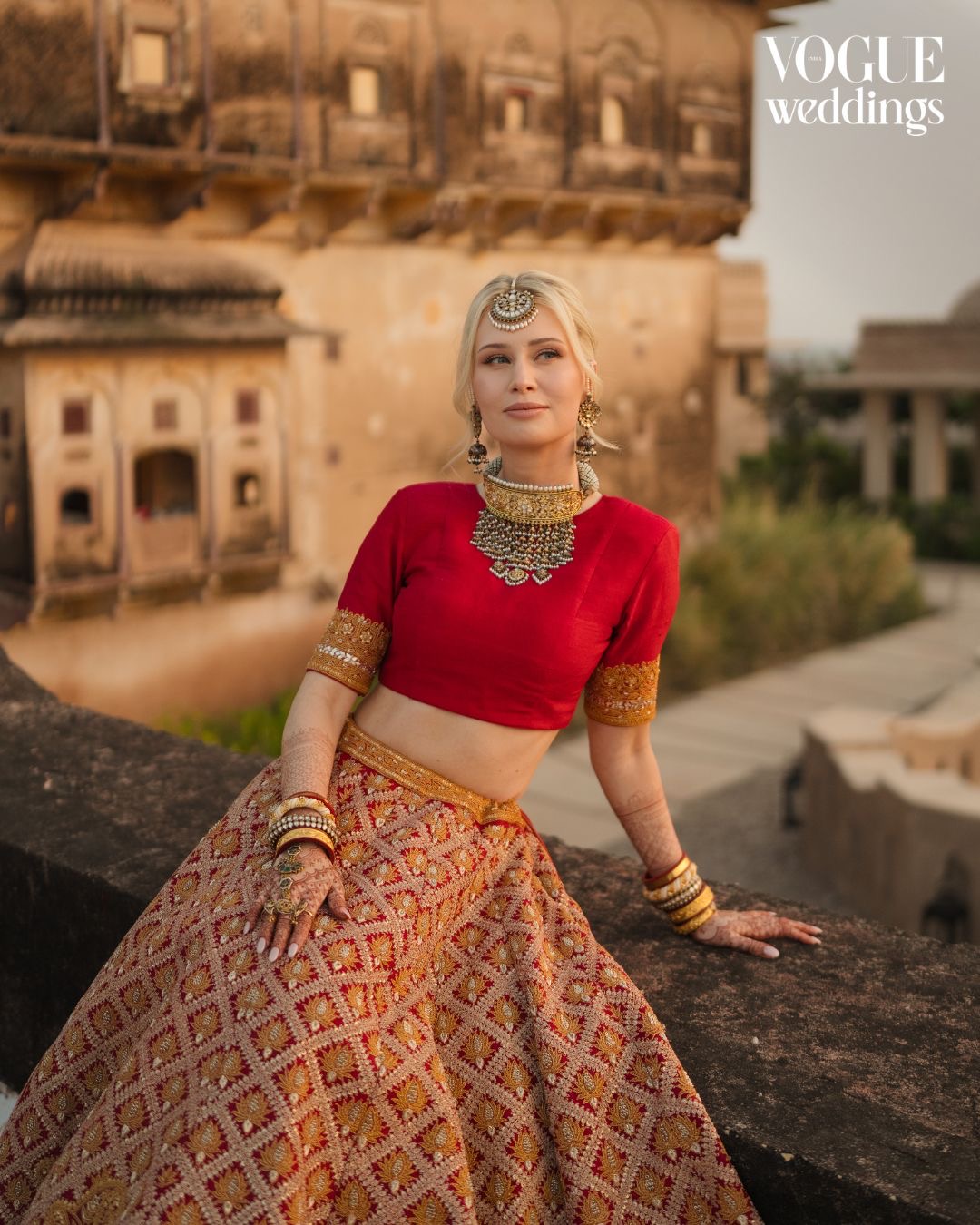
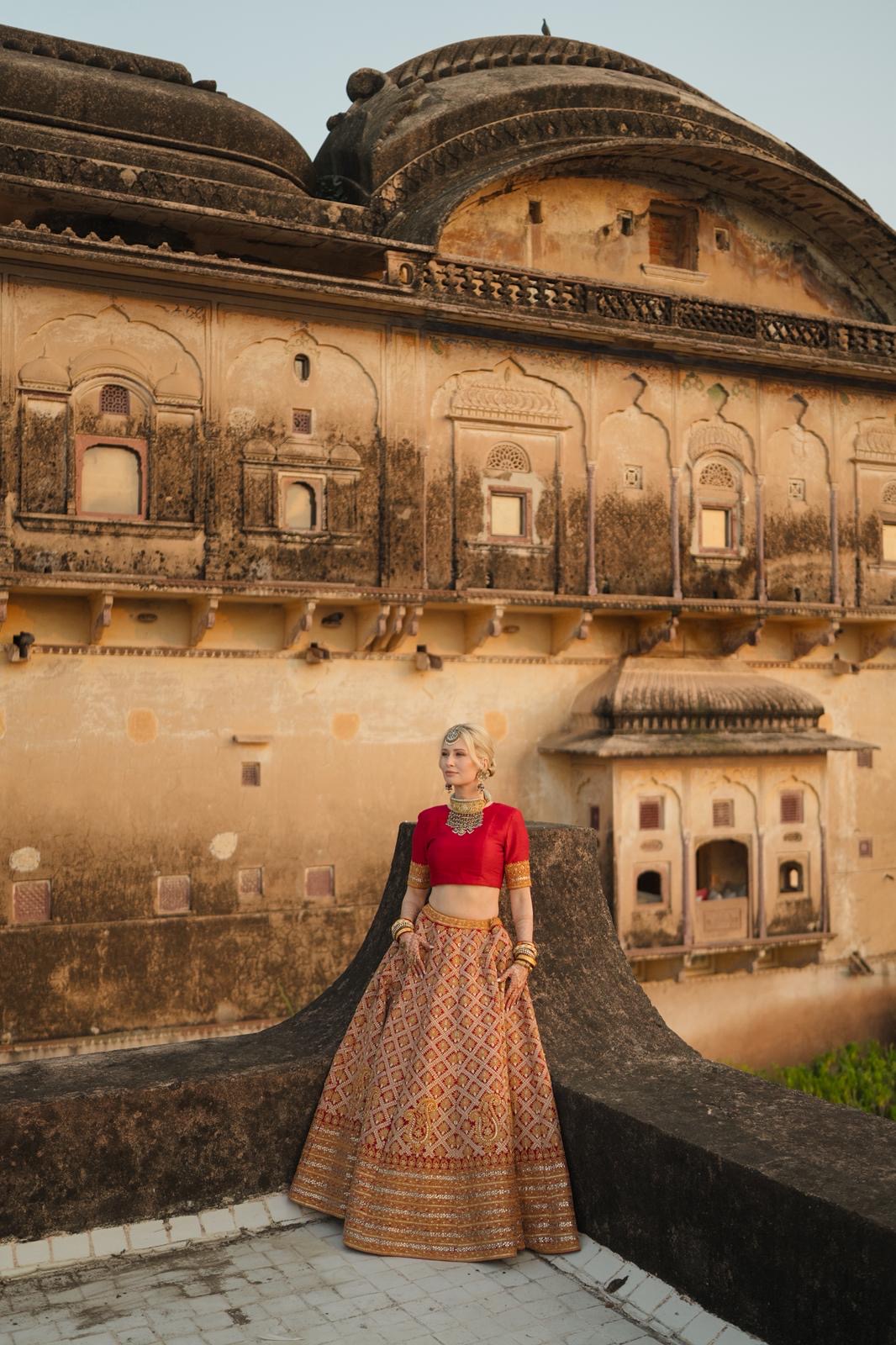
Rebecka’s bridal ensemble, the GPH Kamalkash Lehenga, anchors the story. A deep blood-red base, developed over the course of a year, carries intricate marodi and saccha gotta embroidery. The lotus-inspired composition unfolds with deliberate symmetry—controlled, yet fluid. The result is immersive, where couture becomes a study in balance and depth.
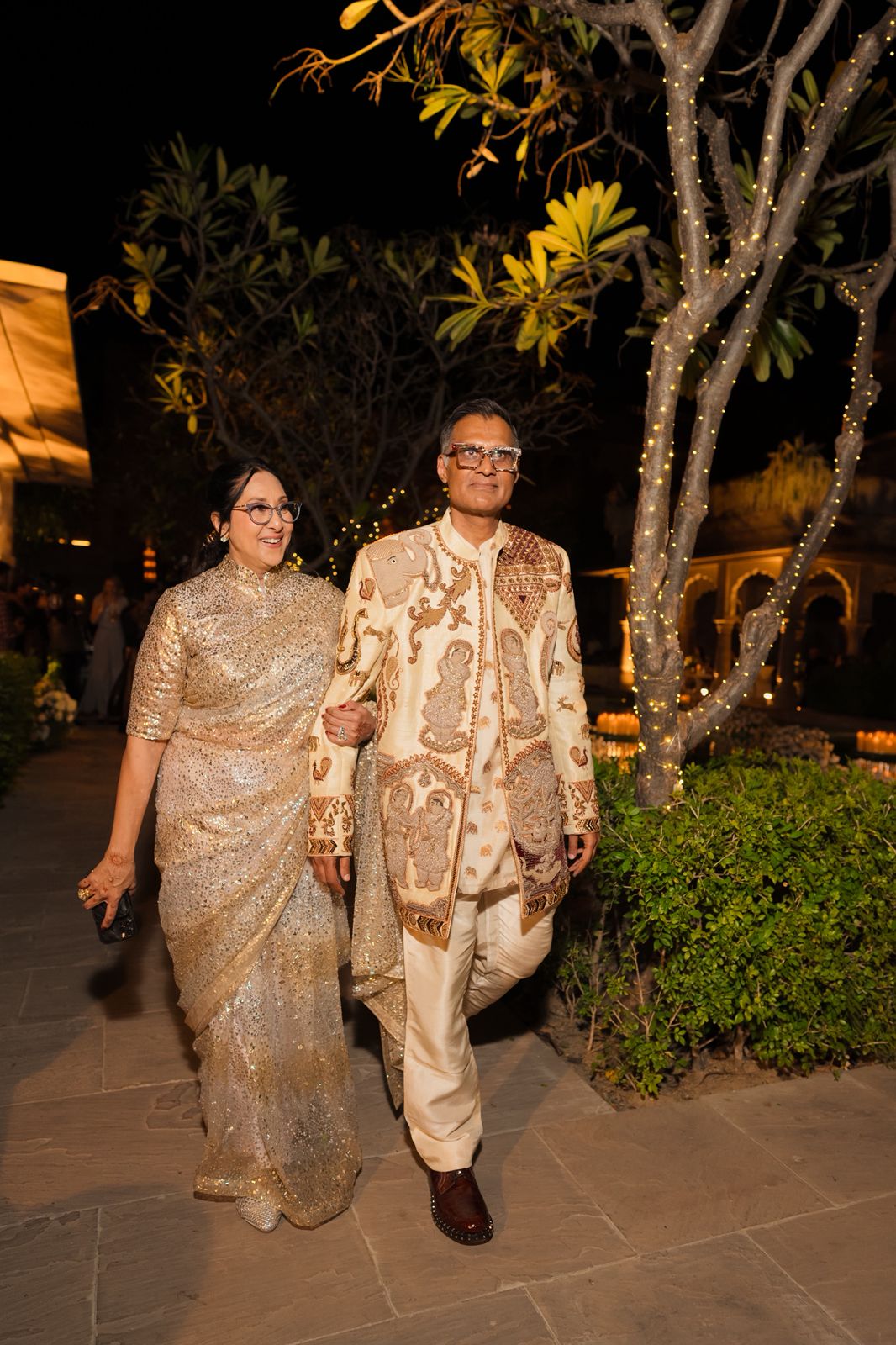
Mrs. Lara’s wardrobe explores luminosity through restraint. Golden tones emerge through dok uthav, antique zardozi, and marodi, creating a quiet radiance. Her sangeet look in pure linen introduces an unexpected dimension—Sanganeri postage stamp motifs—graphic, nostalgic, and subtly disruptive.
Mr. Shreyas Ji’s ensembles maintain a composed rhythm. The ivory Divya Sutra Ensemble embraces minimalism through tonal embroidery and Elephant Silk, while the khakhi bandi set introduces dimension with sculpted tiger motifs. A mustard bandhej look for haldi completes the narrative with a measured vibrancy.
Across every look, styling remains intentional. Nothing overwhelms. Every element exists in dialogue—silhouette, textile, and detail moving in quiet cohesion. The final imagery feels cinematic, yet grounded. Considered, yet instinctive.
Featured in Vogue India, the project reflects a singular idea: when couture engages with time, it does not replicate the past—it reshapes it.
At Gph, garments are not created for a moment. They are constructed to endure beyond it.